A ten-second store with a mobile PSI of 14
A nail-paint brand with a 5,600-strong community was losing mobile shoppers to load time, and losing the proof and product feeds that sell to them. It now loads in 2–4 seconds and scores 70+ on mobile, 99 on desktop.

A community of 5,600, and a store too slow to serve them.
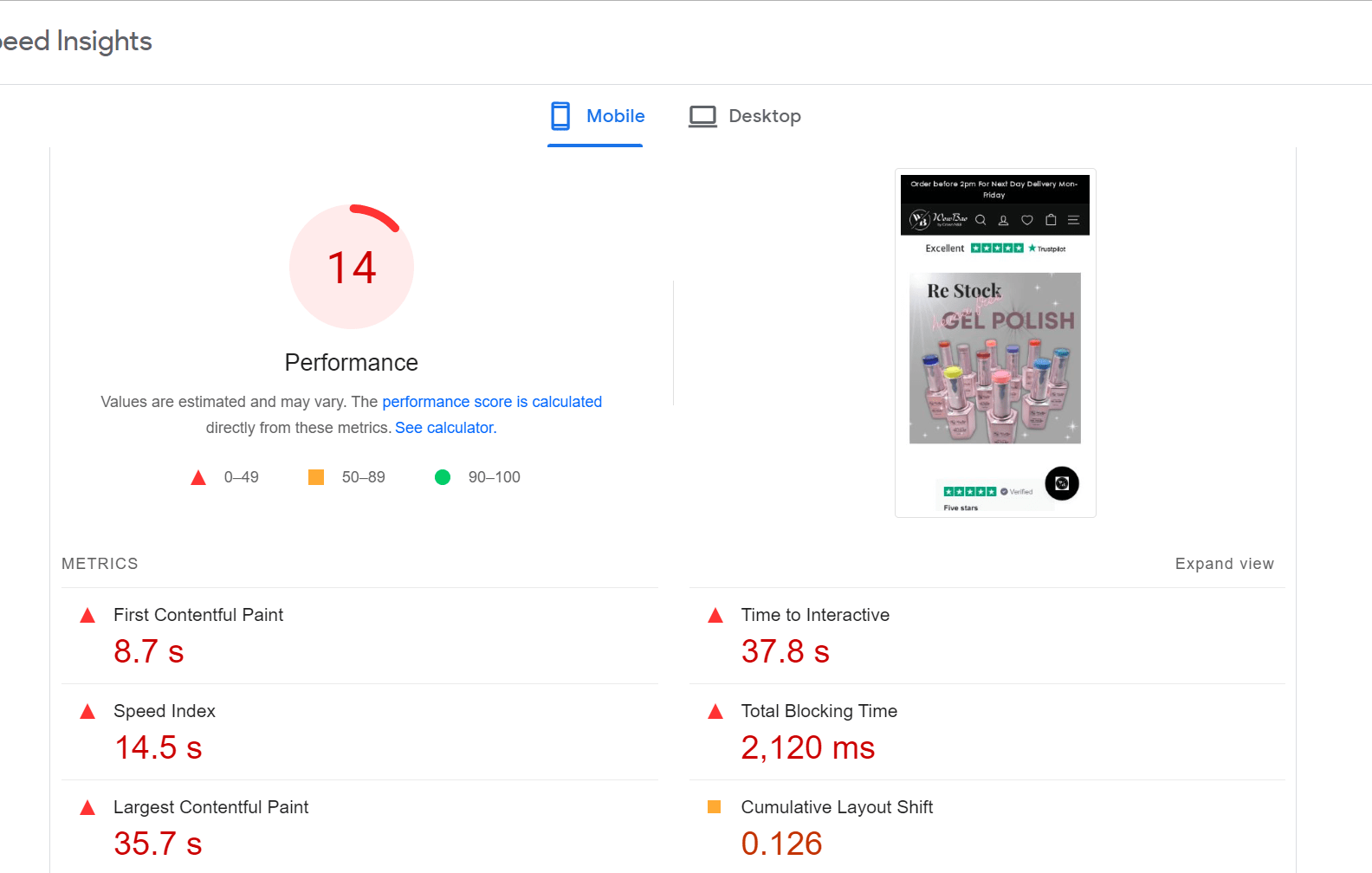
WowBao Nails is a popular nail-paint brand with a genuinely engaged community, over 5,600 members. Demand was not the problem. The store was taking more than ten seconds to load and scoring 14 on mobile PageSpeed, which on a brand this social means most of the traffic arrives on a phone and leaves before the first product appears.
Mark came in with two concerns rather than one. Alongside the speed, the Google Shopping feed and the Trustpilot review integration weren't working properly, so the store was simultaneously hard to reach through shopping ads and unable to show the social proof it had earned.
Three templates and two integrations.
Diagnosed mobile first
A PSI of 14 is not one problem, it's a queue of them. Home, collection and product were profiled separately on mobile hardware to find where each template's ten seconds actually went before anything was changed.
Cut app and script weight
Redundant apps removed, the remaining third-party scripts deferred so they stop competing with the page a customer is waiting on. On a store at this baseline, this is where the biggest single block of time is hiding.
Rebuilt image and theme loading
Product and swatch imagery resized and served responsively, below-the-fold media lazy-loaded, render-blocking CSS and JS trimmed across the three templates, a colour-led catalogue lives or dies on how its images load.
Fixed Google Shopping and Trustpilot
The product feed corrected so listings validate and stay in Merchant Center, and the Trustpilot integration reconnected so review content renders on the product page, as markup that loads with the page rather than blocking it.
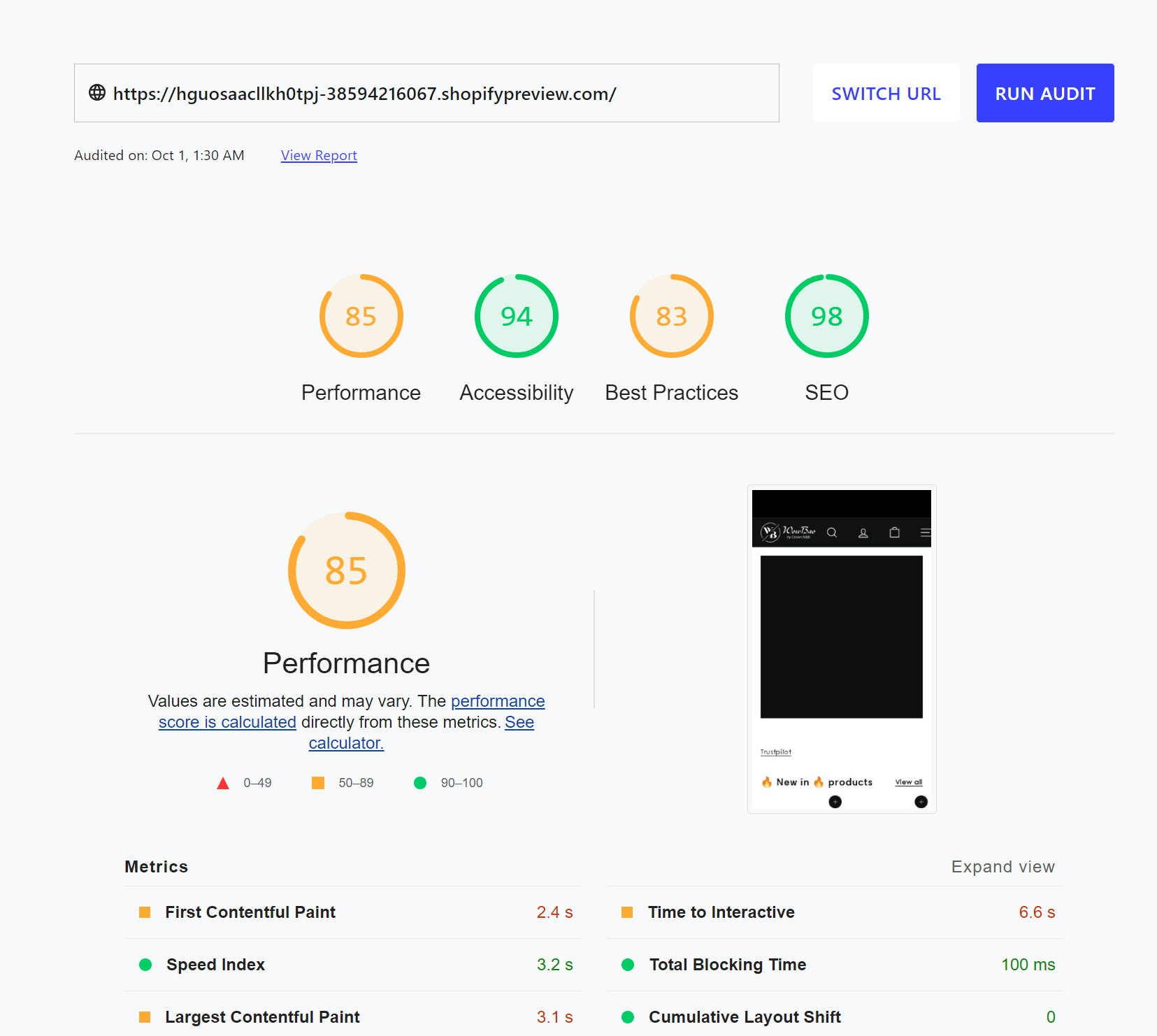
Before and after, measured.
Speed and integrations were the same problem.
Mark described two issues, and it would have been reasonable to quote them as two jobs. They weren't. Broken third-party integrations and a ten-second load time usually share a cause: scripts stacked into the theme over years, each one added to fix the last, none of them removed. The review widget that isn't rendering and the feed that isn't validating are symptoms of the same layer that is also holding the page hostage.
So the integrations were rebuilt as part of the performance work rather than bolted back on afterwards, Trustpilot returning to the product page in a form that doesn't block first paint, the Google Shopping feed corrected at the data level instead of patched at the template. Fixing them any other way would have quietly spent the seconds we'd just recovered.
Ten seconds down to two.
Load time now sits between two and four seconds, mobile PageSpeed climbed from 14 to 70+, and desktop reached 99. The Google Shopping feed and the Trustpilot review integration were resolved alongside it, the store is both faster and doing the jobs it couldn't before.
O'Donnell Moonshine
Losing mobile shoppers?
Send me your store URL and your PageSpeed score. I'll tell you which seconds are recoverable before you spend anything.
Start a conversation