Two seconds off the load time of a Shopify Plus store
An established Shopify Plus spirits brand came in with a storefront that looked right and loaded slowly. The work was performance only, no redesign, no replatform.
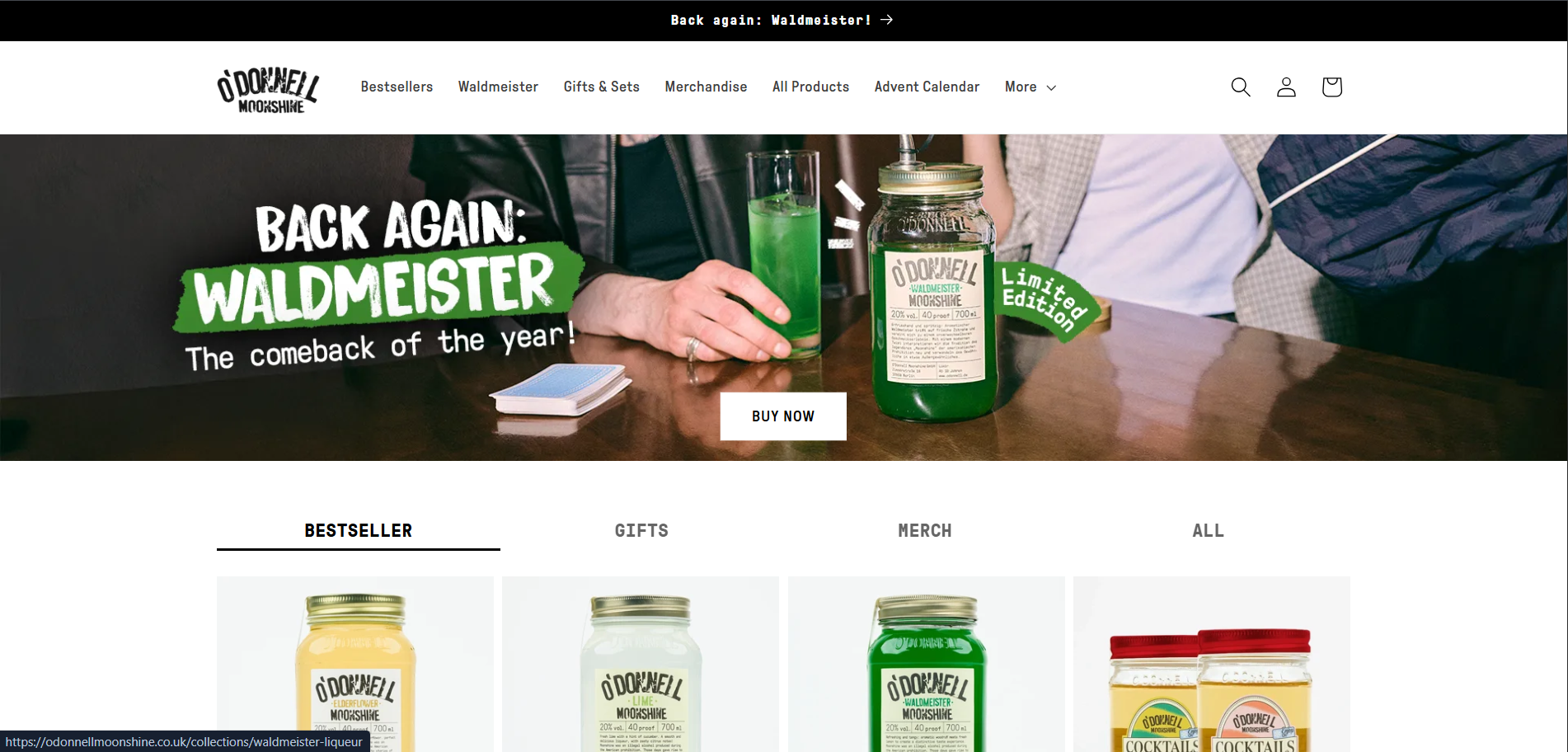
A well-built store carrying years of weight.
O'Donnell Moonshine is a long-running Shopify Plus merchant with a storefront that had been extended repeatedly, apps added for one campaign and never removed, tracking scripts stacked in the theme, hero imagery uploaded at print resolution. None of it was wrong on its own. Together it meant customers waited.
Julien's brief was narrow and useful: make it fast, change nothing about how it looks. On a store this size that's the right constraint, a speed project that quietly becomes a redesign is a speed project nobody can measure.
Four passes over the storefront.
Audited before touching anything
Baseline measurements across templates and devices, so every later change could be attributed to a number rather than a feeling. The audit is also what separates the expensive problems from the loud ones.
Cut the third-party payload
Unused apps and legacy scripts removed, the remaining ones deferred so they stop blocking the first render. Most of the recovered time on a mature Plus store lives here, not in the theme.
Rebuilt how media loads
Images resized and served responsively, below-the-fold media lazy-loaded, the hero prioritized so the first thing a customer sees arrives first instead of last.
Tightened the theme code
Render-blocking CSS and JS trimmed, fonts loaded without a flash, redundant section markup consolidated, all inside the existing design, so nothing shifted visually.
Same storefront, faster.
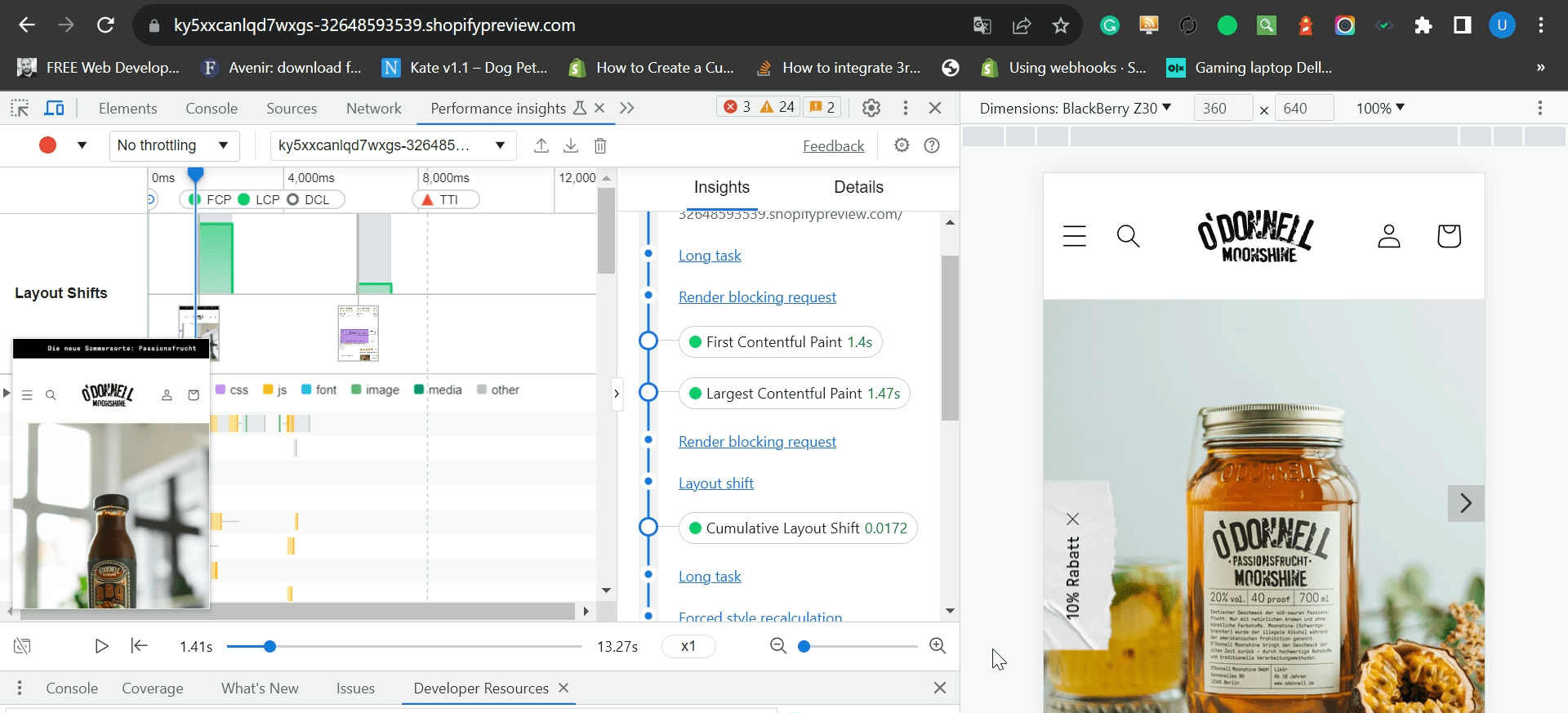
Two seconds is a shopping decision.
Speed work on an established store is mostly subtraction, and subtraction needs evidence. Every app on a Plus storefront was installed for a reason someone still remembers, so the audit exists to prove which of those reasons is still earning its milliseconds. That's why the measurement came first and the deletions came second, the same order that makes it possible to hand the client a number rather than an assurance.
The other discipline is holding the design still. Faster is easy if you're allowed to remove things customers see; the constraint here was that the storefront had to look identical afterwards, which pushes all the gains into loading strategy, media handling and theme code. Two seconds recovered under that constraint is worth more than four with a redesign attached, because it's attributable.
Faster storefront, untouched design.
RazorSharp
Store loading slowly?
Send me the URL and I'll tell you where the seconds are going before you commit to anything.
Start a conversation