Figma-based Shopify theme development, and an SEO-safe BigCommerce migration
Rebuilt and migrated a 140+ product natural wellness catalogue from BigCommerce to Shopify, custom theme from Figma, no data loss, minimal downtime.
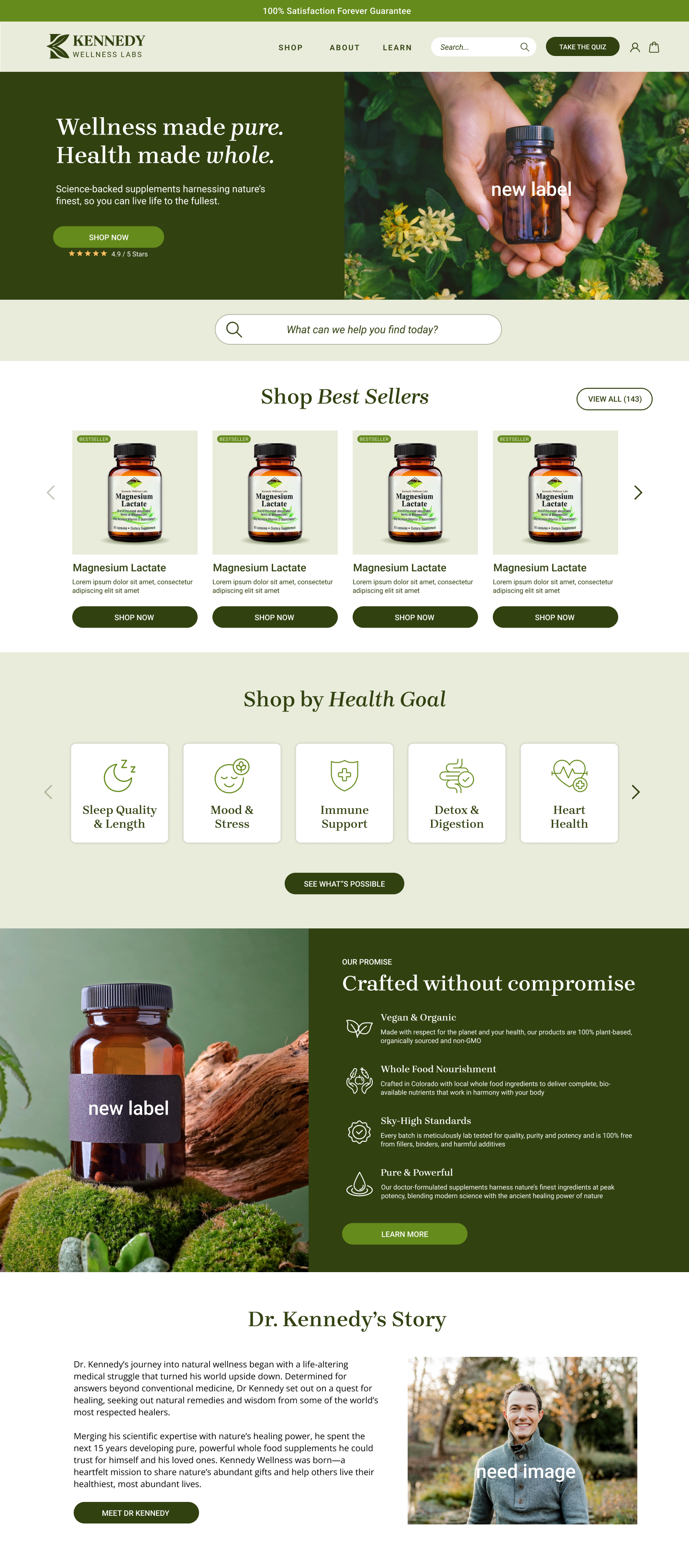
Five things the project had to do.
A brand on BigCommerce with a 140+ product catalogue, a storefront that didn't carry its natural wellness positioning, and no real support for the repeat purchase behaviour that drives a supplement business.
Rebuild and migrate the client's existing eCommerce site from BigCommerce to Shopify.
Create a modern, custom-branded online experience that aligns with the client's natural wellness positioning.
Improve usability, product discovery, and conversion through optimized navigation, catalog filters, and cross-selling functionality.
Support subscription and repeat purchase behavior with “Subscribe & Save” features and personalized product recommendations.
Build a scalable Shopify theme that can be easily adapted across a large catalog of 140+ products.
Four decisions behind it.
Theme built from the Figma, section by section
Not a stock theme dressed up, a custom build matching the design, structured as reusable sections so the same layouts hold across 140+ products and stay editable in the theme editor without a developer.
Discovery over scrolling
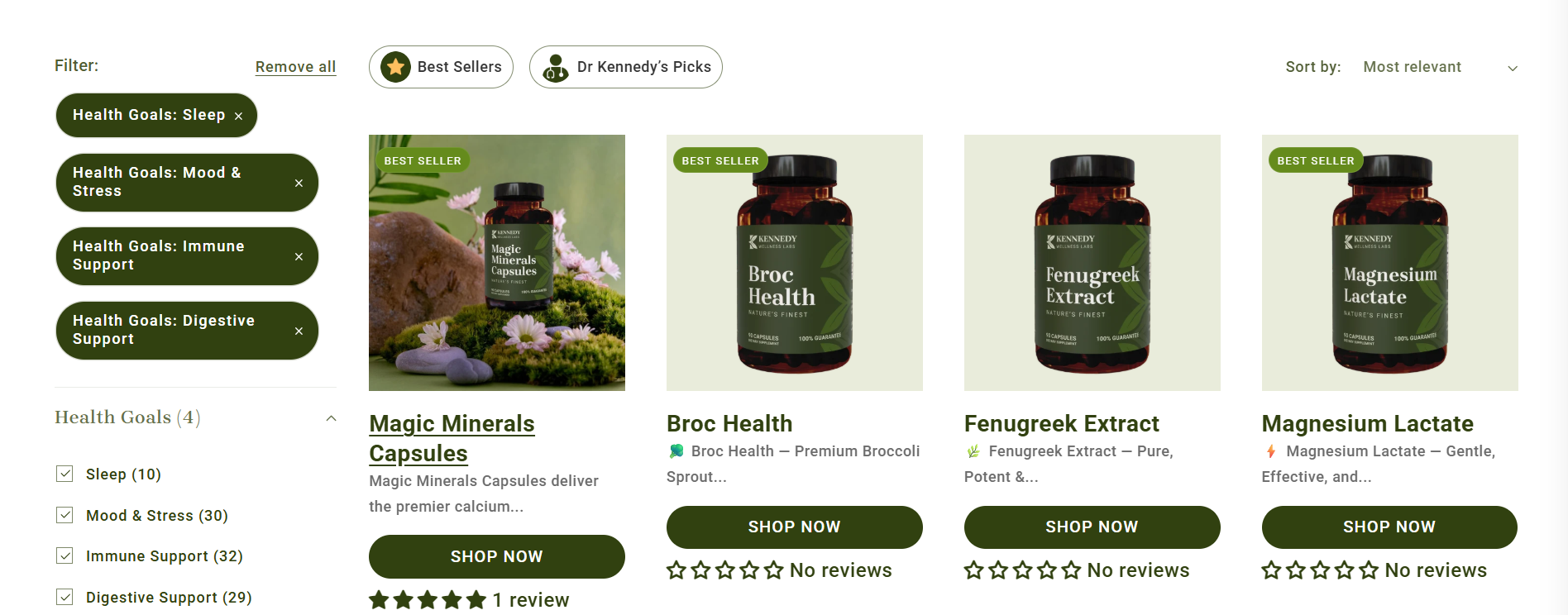
Navigation restructured around how people actually shop supplements, catalogue filters that narrow by health goal rather than by SKU, and a product quiz for customers who don't yet know what they're looking for.
Subscribe & Save, built into the decision
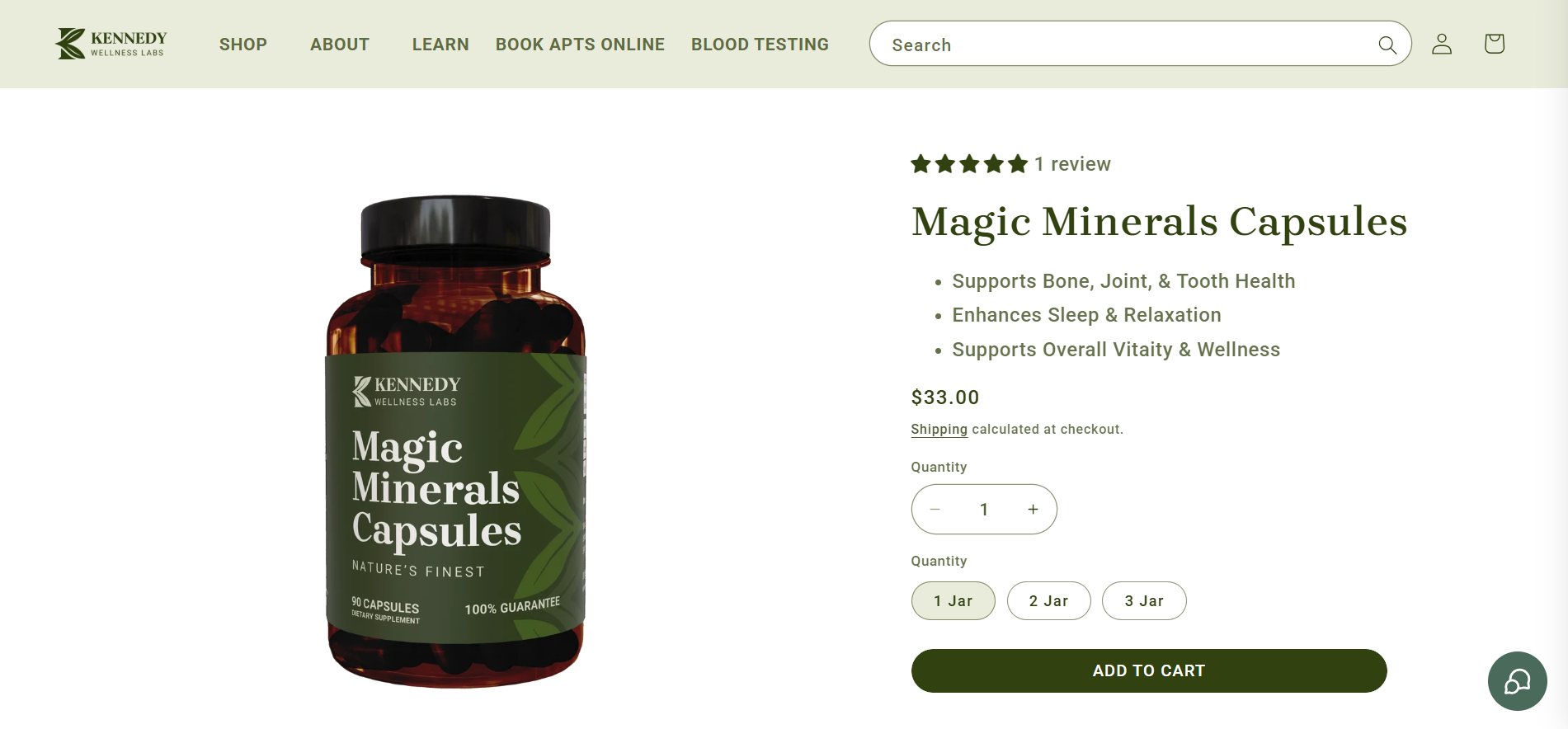
Subscription pricing sits on the product page where the choice is made, not buried in the cart, with personalized recommendations and cross-sells positioned to build the repeat order rather than interrupt it. For a supplement brand the repeat order is the business.
A migration nobody outside noticed
All 140+ products, their data and their history moved across with no loss and minimal downtime, cut over on a rehearsed plan so the storefront was never half-migrated in public.
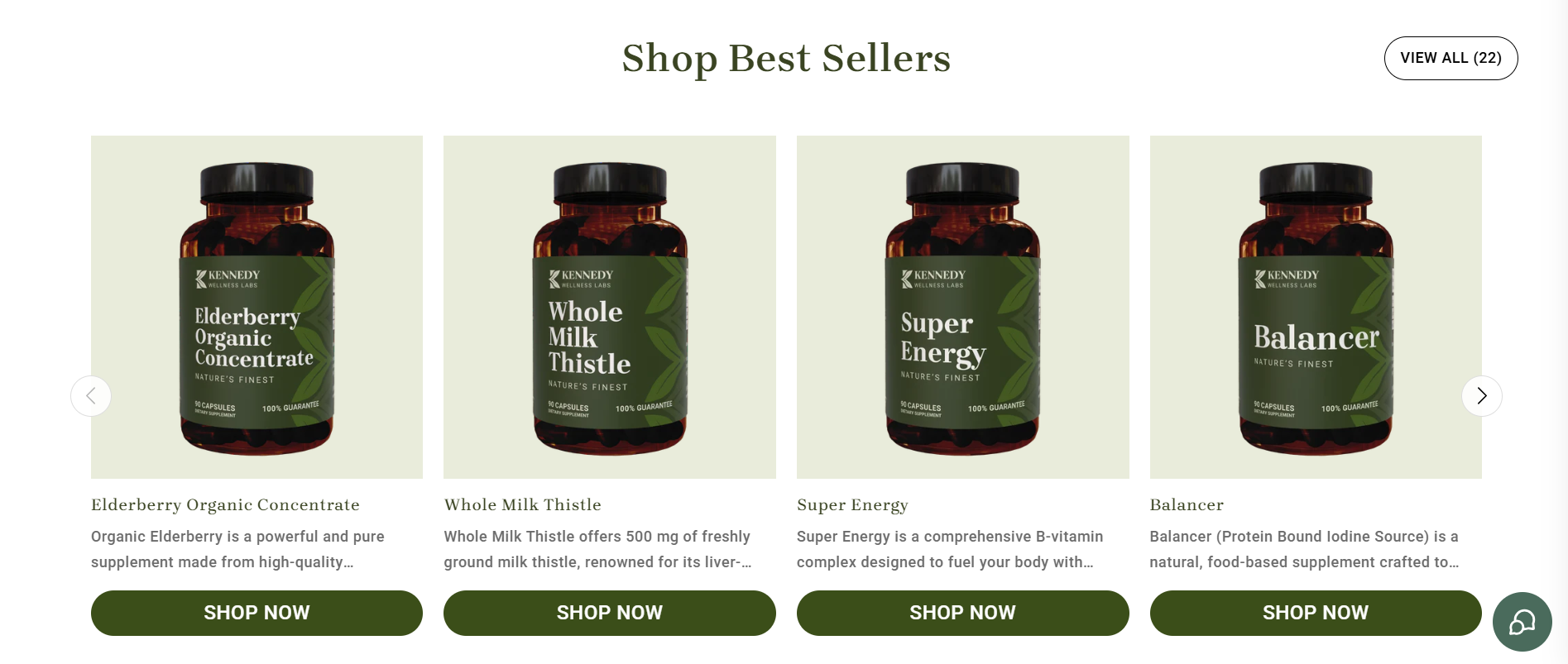
The store as it ships.



Why “SEO-safe” is a plan, not a promise.
BigCommerce and Shopify disagree about URLs at a structural level, product paths, collection paths, pagination and filter parameters are all shaped differently. Move 140+ products without accounting for that and you don't lose a few links, you lose the rankings the whole catalogue was earning. So the URL map came first: every existing product, category and content page inventoried, matched to its Shopify destination, and written as a redirect before anything went live.
Metadata moved with the products rather than being regenerated, so titles and descriptions the brand had refined over years survived the move. The cutover was rehearsed on a staging store, redirects verified against the live sitemap, and the switch made in a window short enough that customers hit a working store on either side of it.
Launched, and selling differently.
Custom Vinyl Records
Moving platforms and worried about SEO?
Send me your catalogue size and current platform, I'll tell you what the risk actually is.
Start a conversation