Custom vinyl product personalization app with Shopify–Kunaki order integration
A personalization app built from the ground up: artwork and audio uploads, live previews and validation, wired into a third-party manufacturer's fulfilment workflow with no manual intervention.
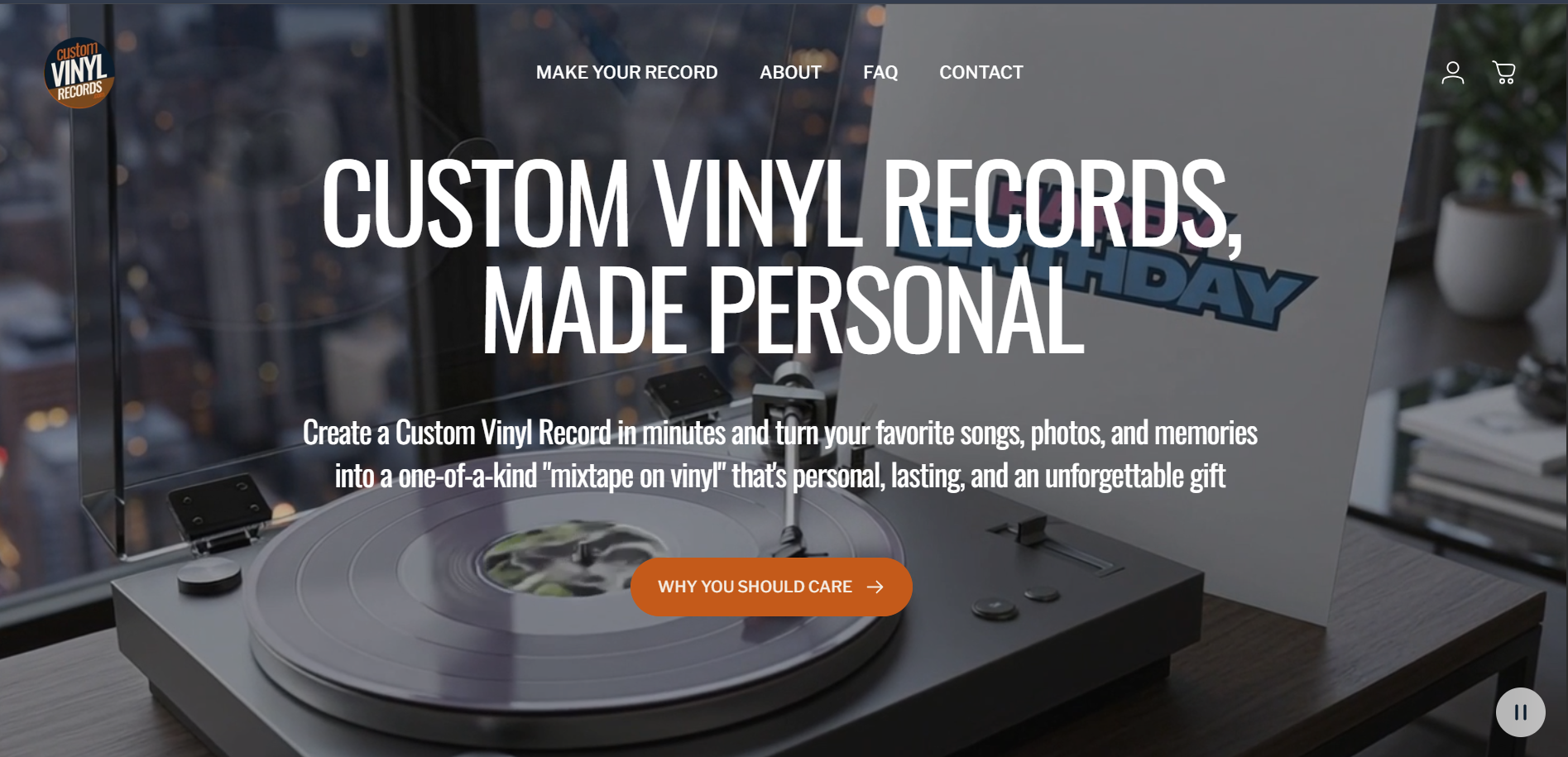
A product Shopify couldn't sell out of the box.
John wanted to launch a highly customized vinyl record business on Shopify, allowing customers to create personalized vinyl records by uploading artwork and audio files, something not supported by standard Shopify apps. In addition, orders needed to be automatically processed and fulfilled via Kunaki, a third-party vinyl manufacturer, without manual intervention.
The challenge was to build a custom, scalable system that handled personalization, validation, order accuracy, and manufacturing automation, all while remaining user-friendly for both customers and admins.
Six constraints to design around.
No existing Shopify app supported customer audio uploads and image uploads together.
Complex personalization logic with live previews and validations.
Shopify order data needed to sync accurately with Kunaki's manufacturing workflow.
High risk of order errors, wrong files, quantities, or shipping methods.
The client needed admin-level controls (toggles, availability, fallback logic) without developer dependency.
The system had to remain stable during high-traffic periods, ads and holidays.
A fully custom personalization app, built from the ground up.
Tailored specifically to Shopify and Kunaki's fulfilment requirements, rather than assembled from plugins that each solve part of the problem.
Custom product builder, no third-party apps
- Image uploads with cropping, previews and format handling
- Audio uploads with file validation
- Dynamic UI controls and conditional logic
Advanced admin controls
- Enable and disable product options and features via toggles
- Variant availability management, including “Sold Out” visibility
- Editable labels and UI text directly from the admin panel
Kunaki order processing integration
- Automated order creation and submission to Kunaki
- Accurate quantity, shipping method and product mapping
- Fallback logic to prevent failed orders
- Status syncing and fulfilment verification
Reliable order flow & QA safeguards
- Ensured correct files, quantities and shipping details
- Prevented mismatches between Shopify and manufacturer systems
- Tested extensively with real production orders
Performance & UX optimization
- Mobile-friendly upload experience
- Stable handling of large files
- Clean, guided customer flow to reduce confusion and support requests
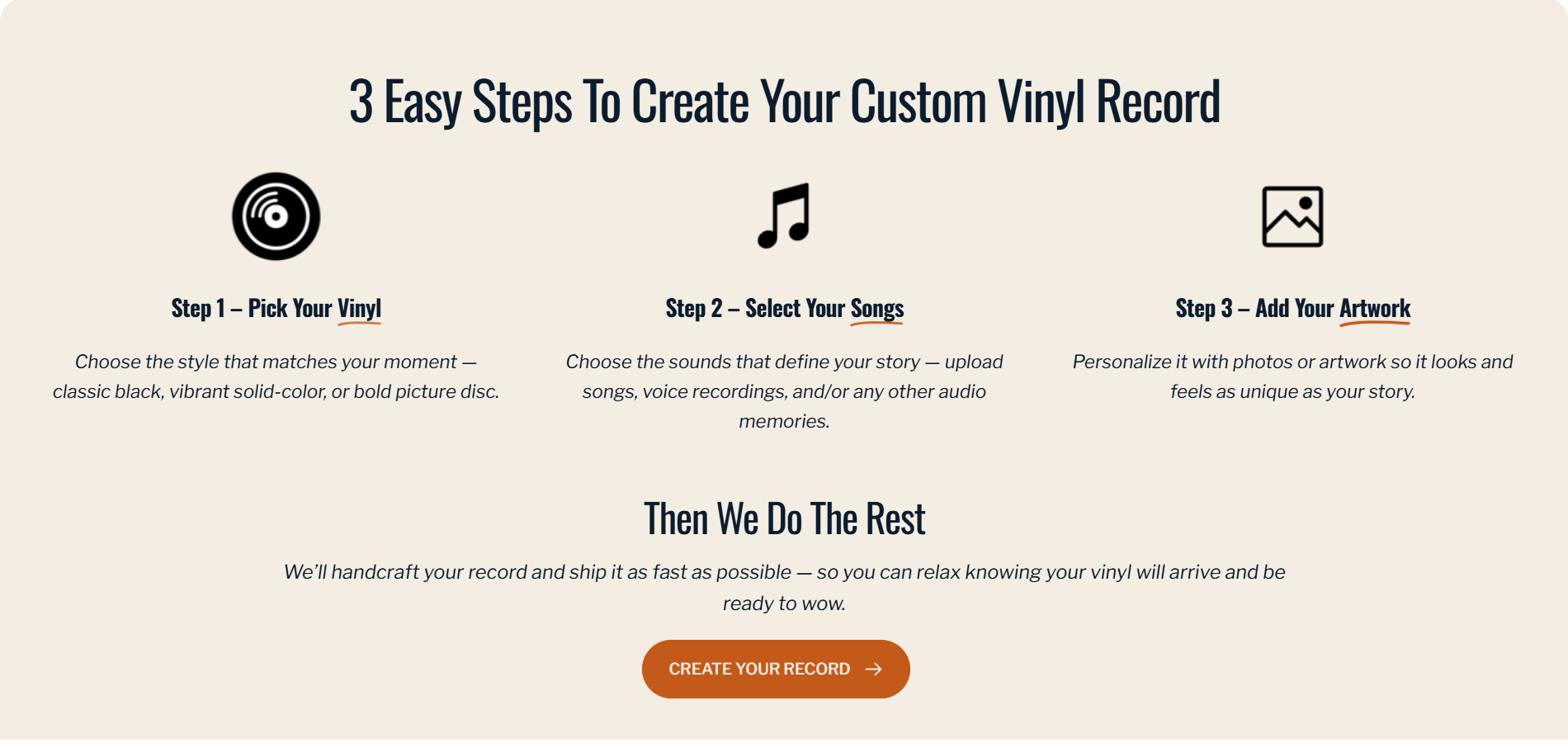
The app as it ships.
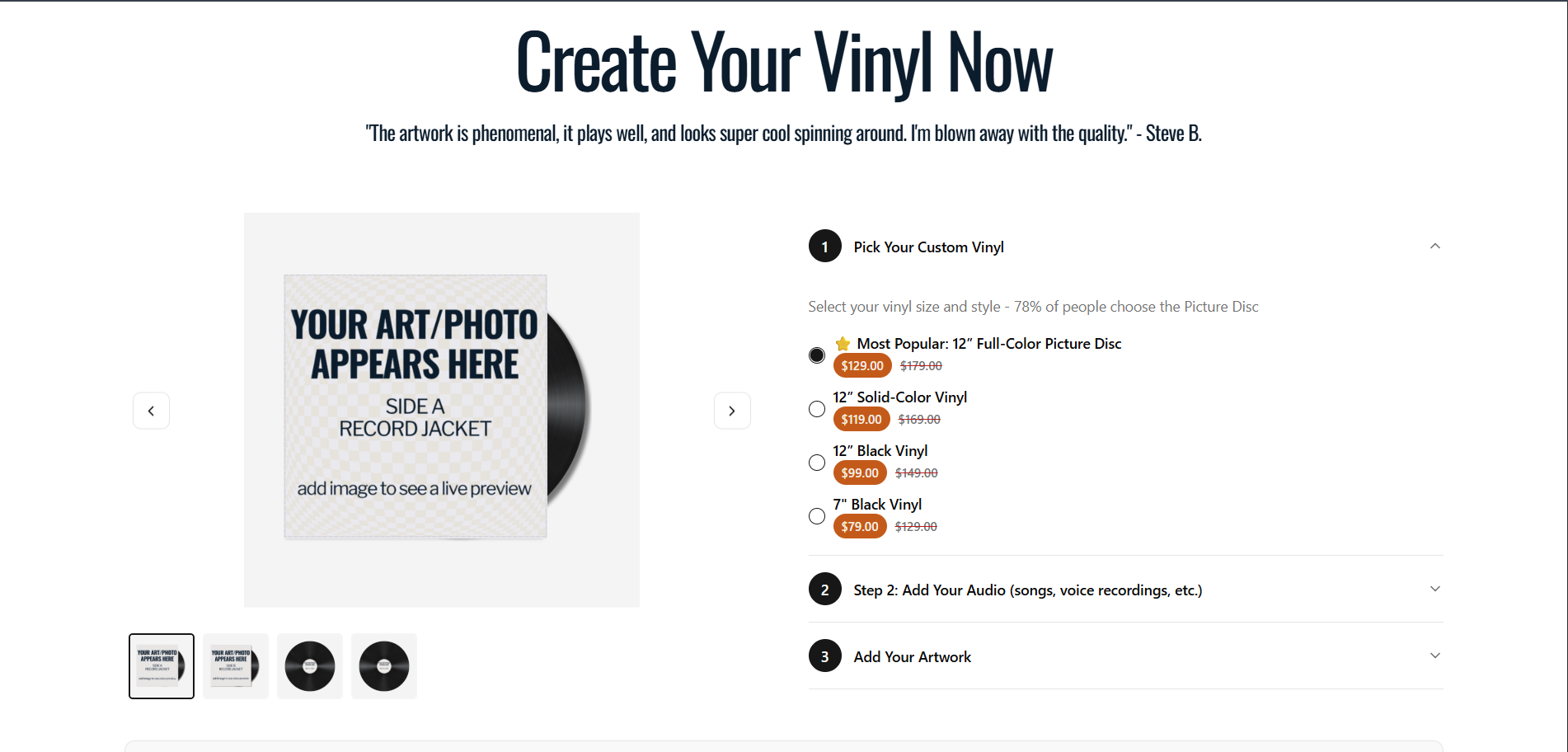
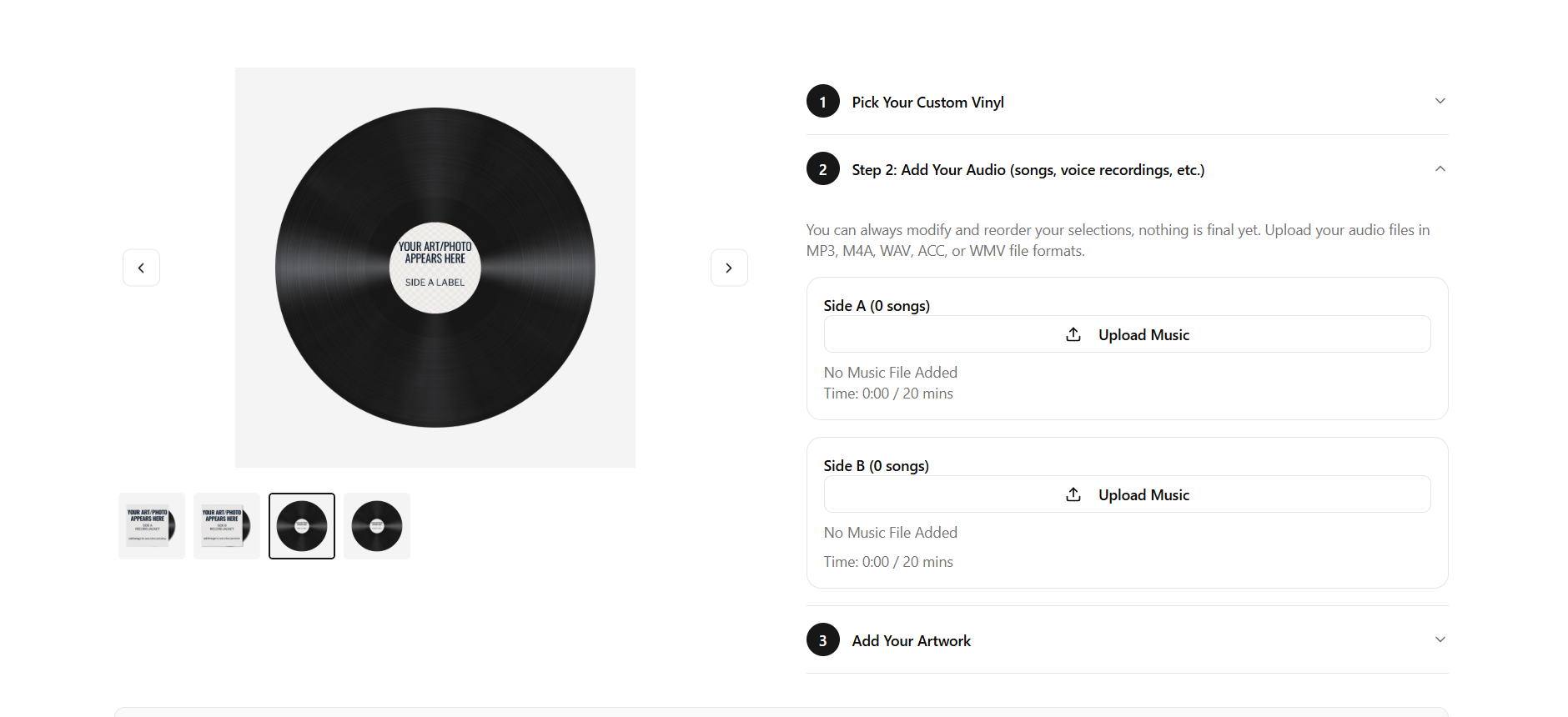
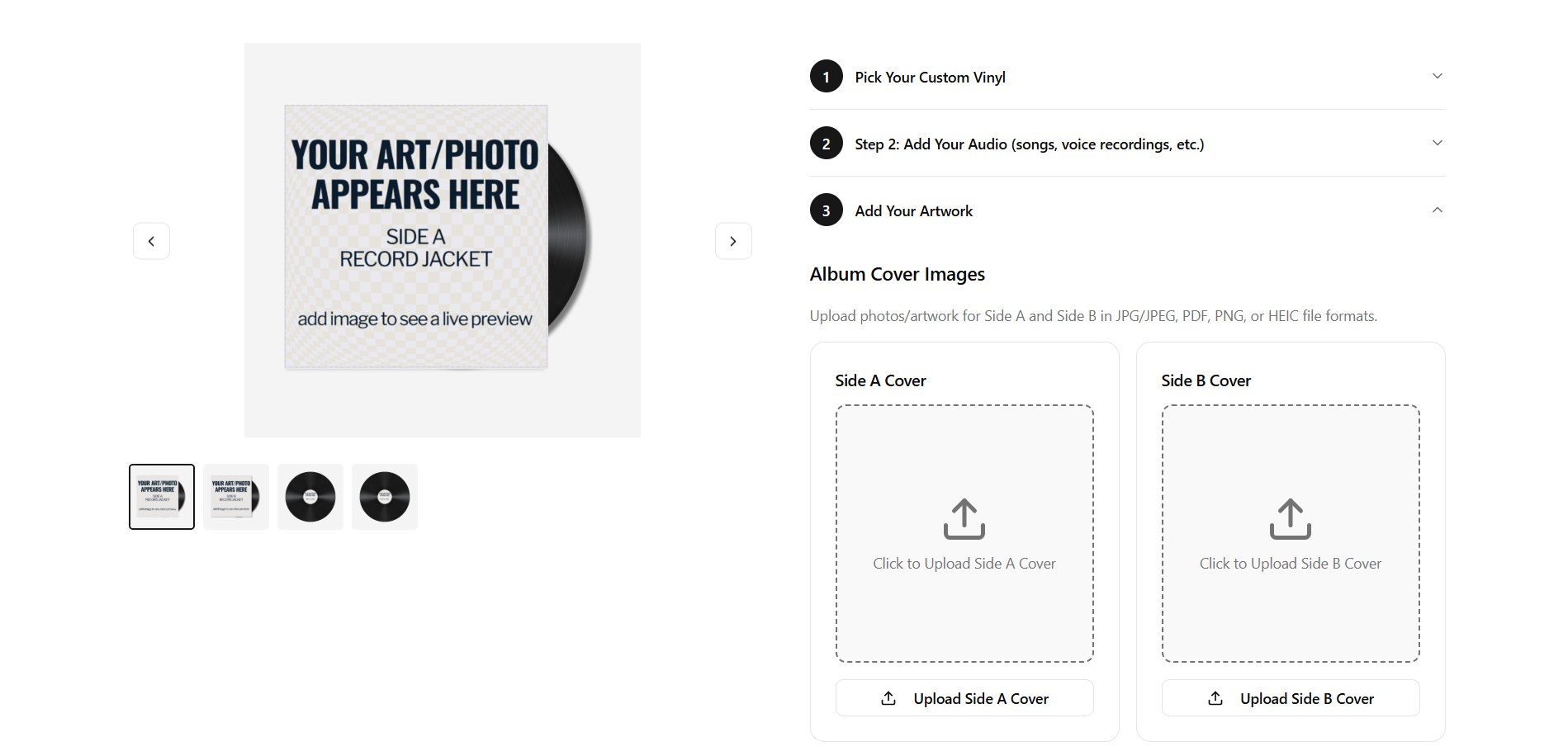
The part that matters is what happens when the handoff fails.
Automating fulfilment is easy while every request succeeds. The real work was the failure path: a submission to Kunaki can time out, come back rejected, or land with a shipping method the manufacturer does not accept for that destination, and on a personalized product there is no generic replacement to ship. So the integration validates the order before it submits, holds anything that fails validation rather than sending it half-formed, and retries transient failures behind fallback logic instead of silently dropping them.
The same discipline applies to the files themselves. Audio and artwork are validated at upload, checked again at submission, and reconciled against the Kunaki order once fulfilment is confirmed, which is why mismatches between what a customer bought and what got manufactured never became a support queue. The whole flow was tested against real production orders before launch, not staged ones.
Live, and running itself.
The final solution required roughly 100 hours of custom development, exceeding the original estimate. To ensure quality and a smooth launch, the additional effort was absorbed without compromising delivery or performance.
Kennedy Wellness
Got something no app can do?
Tell me the workflow and I'll tell you whether it's a build or a bad idea.
Start a conversation